

Flashbacks
Getting older, wanting less, and becoming a darktable person

DEAR EXPOSEUR—It is June. I am within spitting distance of turning 40. A really old man, as my five-year-old puts it.
I have been engaged in the all-consuming photographic ‘hobby’ for more or less half my life. Much of that time I’ve spent learning about light, about other people, about myself, and, most importantly, about digital photo processing software. More on that later.
I have not done a lot of conventional ‘art things’ with my work. By that, I mean that I have not displayed my work in galleries (I did hang some photos in a coffee shop c. 2008); my photographs are not part of any collections; I have not given any lectures or talks on the matter. This isn’t a woe-is-me plea for attention. Most of it is my own fear and detestation of self-promotion and submissions in general.
Recently, Cait sent me a call for submissions from the Baltimore Museum of Art for their exhibition Flashback: Two Centuries of Baltimore Photography.
If you are a Baltimore-based photographer, then I encourage you to submit!
I almost didn’t, but I took it as an opportunity to revisit some photos from the archives, and picked three that I think spoke to the exhibition’s theme of “complexity, beauty, and lived experience of Baltimore.” These are the three I picked:
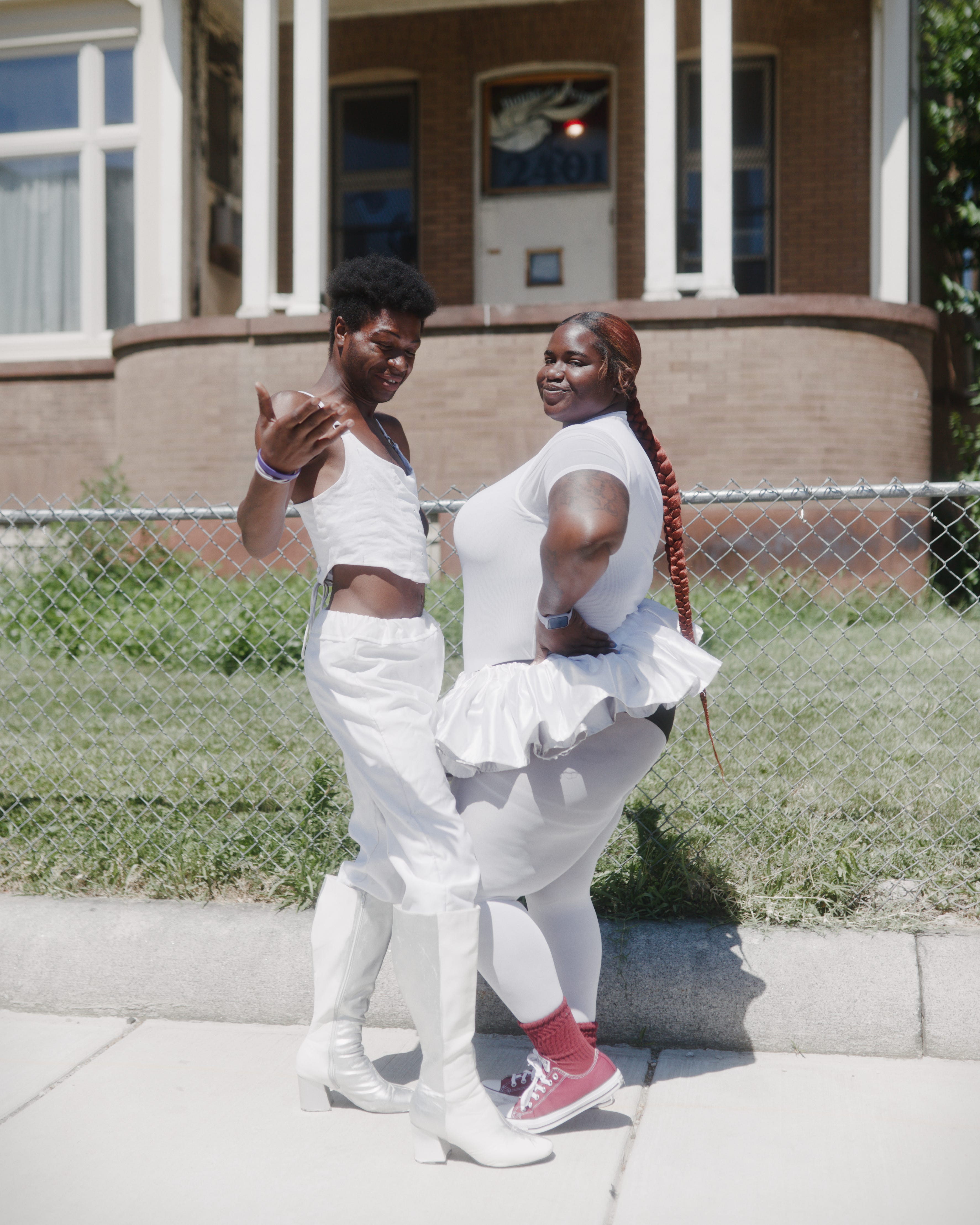
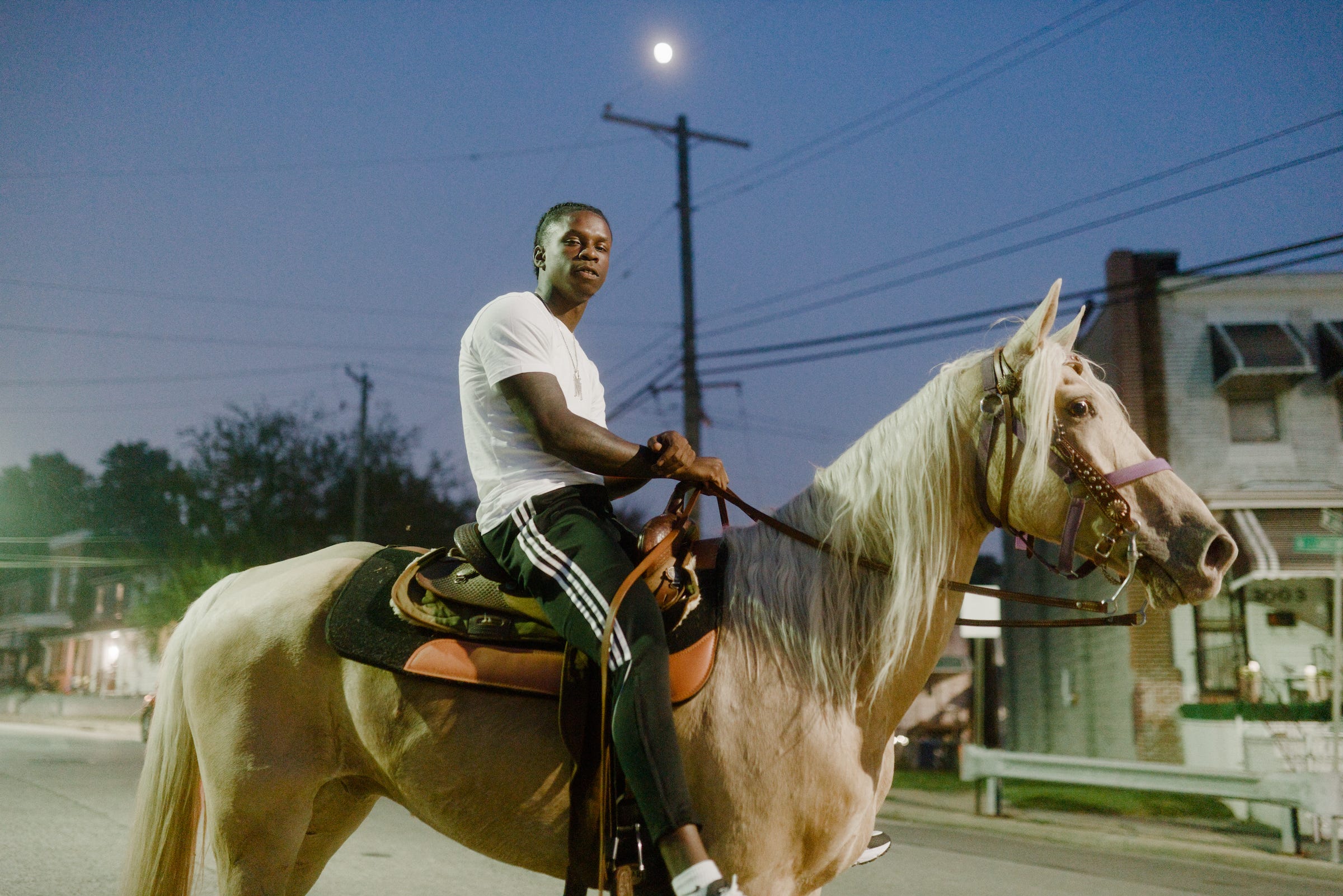
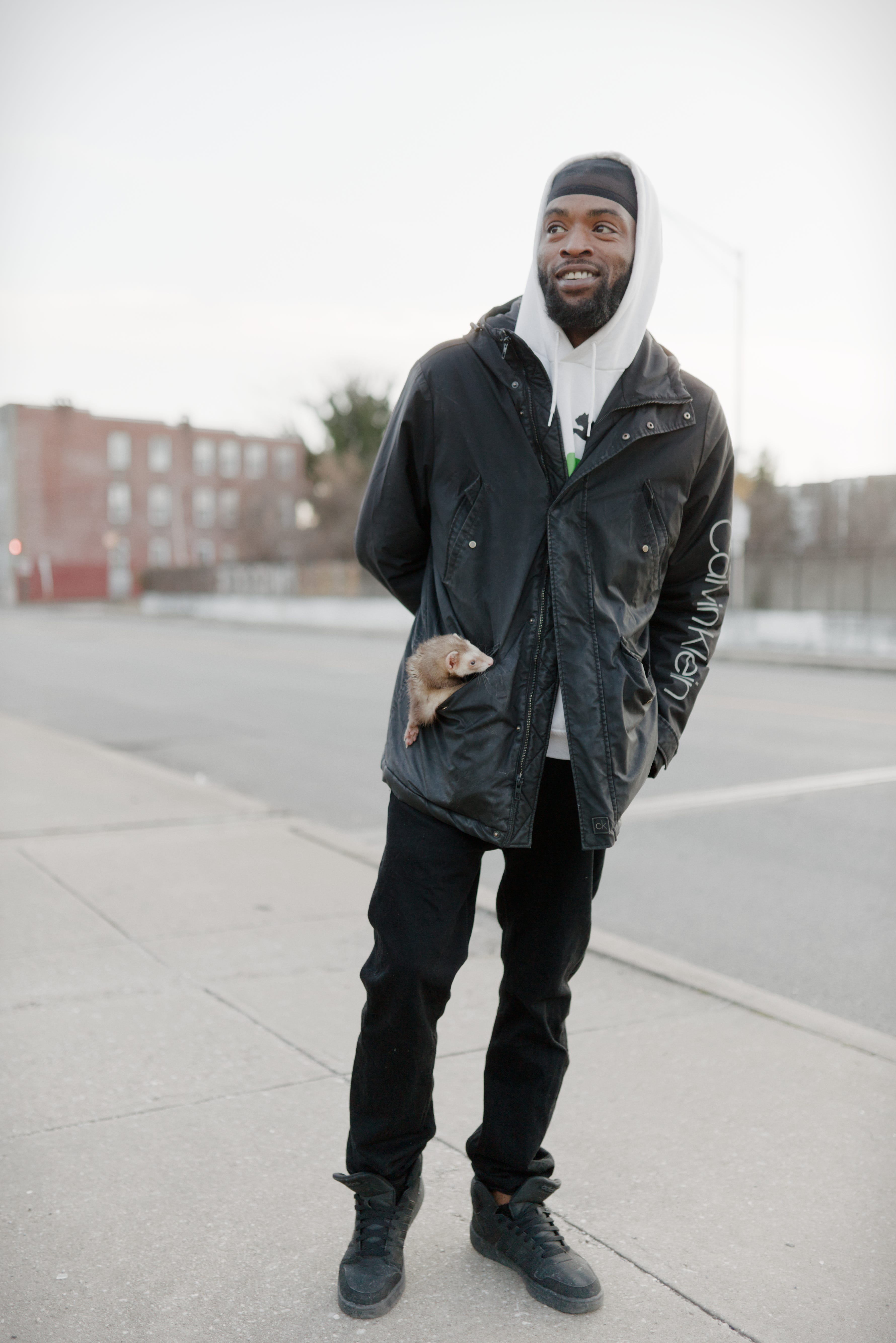
And my accompanying artist statement (another thing I am not keen on):
I’ve been photographing on the streets of Baltimore since the early 2000s, though I’d hesitate to call myself a street photographer. That implies a confidence and a gravitas that I don’t actually have. I think of myself as a learner, and the camera as a reason to meet and learn from people. Baltimore is described as a “city of neighborhoods.” I have always taken that to mean a city of neighbors, and the portraits are how I go about meeting mine. I’m drawn to environmental portraiture because the city and its neighborhoods are as much the subject as the person standing in it. When I approach someone I try not to arrive with a conclusion already formed, since the point is to be shown and taught by the people in this city, in all its variations, from Mosher to Canton, from Mount Washington to Cherry Hill.
In revisiting these photos, I found I wasn’t at all pleased with how my original treatment of them had aged. I’d processed them in DxO PhotoLab — I’d left Lightroom over the subscription model and its ethics, and Capture One over its price — and what I see now is a heavy hand, with too much contrast and too much saturation and a tendency to edit for popping off a small screen.
Some of that is me getting older and wanting less. But a lot of it is the tools. These professional tools, for all their talk of being neutral, still ship for prosumers, preset with default renditions that are contrasty and saturated and sharp, and it takes a really frustrating amount of work to walk a photo back toward something natural. And if not filmic then at least organic. And yes, all three offer more neutral starting points, but at their price point, it makes more sense to start from “free.” And I realized that I was paying a lot of money for a part of the process I didn’t really like all that much.1
So on a lark, and on the strength of a few comments from one Michael Beecham on various photo sites, I decided to try treating my photos in darktable.
I am sorry to report that upon my arrival in midlife, I am now a darktable person. It is photographic dictum that on entering one’s twilight years, a person must hyperfocus on a single aspect of the craft: gear, format, history, birds, subject, etc. For me it is this specific bit of software. That is now my entire defining persona. I regret to inform you.
If you don’t know it, darktable is a free, open-source processor that uses alchemy and a quantity of math I will not pretend to understand to produce very good photographs. I read a number of the forum posts and websites explaining how, and most of them read like research papers. There are no tidy highlights/shadows/blacks/whites sliders like in Lightroom, and usually ten ways to do any one thing across as many modules. You best learn it by watching someone else edit for a while, then mucking around until you’ve got something.2
Most editors open on something that already looks finished, the contrast and saturation baked in before you’ve touched it. darktable starts somewhere flat, almost like LOG footage in video, and a few modules later you have something natural, not overbaked or crunchy.
After fifteen years of working with software that handed me its idea of a finished photo and then working backwards, there's a sense of relief in starting from nothing and adding just what I need.
Below are a few re-attempts that hew closer to my original envisioning for these frames. Original processing on the left, new versions on the right.


You get the picture.
-mw
In editing this post, I am beginning to wonder how much of photography I actually do like?
I recommend Boris Hajdukovic.
Really like these new edits. To my eye, much more natural.
I’ve been using Darktable for about 5 years (longer?). Long enough to forget LR. There is a learning curve for sure - but once you wrap your head around it - it delivers. The film negative inverter module is also pretty good.
My very subjective feel - I prefer colours of photos on the left. Old edits. Most off them. AM Grocery photo - I prefer new edit. But it is not imporatnt. There are milions of possible outcomes, and these are just two of them.